
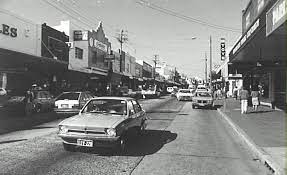
The Canterbury-Bankstown area, located in south-western Sydney, New South Wales, has a rich and diverse history. It lies on the traditional lands of the Dharug and Eora peoples, who inhabited the area for thousands of years before European settlement. European colonisation began in the late 18th century, with the Canterbury district established in the early 1800s and Bankstown named by Governor Hunter in 1797 after botanist Sir Joseph Banks. Originally a rural and agricultural region, the area began to urbanise in the 20th century, especially after the expansion of the railway and major infrastructure. Post-World War II migration contributed to its rapid growth and multicultural character. Today, Canterbury-Bankstown is one of Sydney’s most culturally diverse and densely populated regions, known for its strong community, vibrant local economy, and ongoing urban development.
Heritage compliance can be a difficult part of any development involving a listed heritage item or a property located within a heritage conservation area. There are many restrictions that need to be navigated to ensure the best result is achieved for the client and ensuring the heritage values are retained.
Town Planning Collective is a boutique town planning and heritage consultancy that was formed with the goal of providing expert town planning and heritage reports for the every day client. With more than 15 years of experience in town planning and heritage consulting, we provide expert reports and advice for all developments within NSW and Queensland. Our experience and knowledge allows us to think outside the box to gain approvals where other firms fail. We offer a tailored approach to our services and can assist you with your development application in what ever suits your requirements. With a strong working knowledge of legislation, development and Council processes we are confident our reports will add value to your development and gain approval faster.
Experienced consultant town planners can help with your development

Bringing an experienced town planner and heritage consultant onboard can help you save money by avoiding unnecessary additional information requests or additional reports.

Engaging a town planner with heritage experience to prepare your statement of environmental effect and heritage impact statements cuts down on the approval timeframe.

Experienced town planners can project manage the development process. Consulting with relevant consultants to ensure your project is delivered and approved quickly.

Town planners and heritage consultants with Council experience are valuable in the development process. Council development officers know the process and understand what needs to be done to gain approval.

Town planners and heritage consulants help remove the stress out of a development application approval by avoiding additional information or just handling the whole Council process for you!
Heritage compliance can be a difficult part of any development involving a listed heritage item or a property located within a heritage conservation area. There are many restrictions that need to be navigated to ensure the best result is achieved for the client and ensuring the heritage values are retained.
Our heritage planner has over 15 years experience in the heritage space with experience as a Council Heritage Planner for one of Sydney’s largest Councils. We provide expert advice and support for your heritage development and can provide heritage impact statements as well as town planning services all in the one place, saving you time and money dealing with multiple consultants.
A heritage impact statement is a report that accompanies a development application where a property is a listed heritage item (listed in the Local Environmental Plan) or located within a heritage conservation area. The report provides details to the history of the item including the historical significance and details any previous developments that have occurred to the item. The report provides an assessment of the impacts the development will have on the heritage values of the item or conservation area and can provide mitigation measures to ensure the proposed development does not detract from the heritage significance.
A Heritage Impact Statement (HIS) contains five sections as follows;
Where minor work is proposed for a heritage item, such as repainting, minor repairs and replacing building elements (like for like), a report can be submitted to Council (under clause 5.10 of the LEP) to confirm whether the works require development consent. Where the works are shown to not impact the heritage item, Council will confirm that they can be undertaken without a development application. This process still requires the preparation of a heritage report but the report provides details to confirm the opinion it should be undertaken as exempt development. In the event that Council doesn’t agree with the recommendation, the report can be adapted easily to use for a development application.
A heritage conservation area (HCA) is as an area recognised and valued for its historic and aesthetic character. Important elements contributing to an HCA’s heritage significance include the architectural style of buildings, fences, subdivision pattern, trees and gardens. Any work occurring in an HCA requires a heritage impact statement which outlines the proposed development’s compliance with the heritage provisions of the heritage conservation area. The report provides a detailed assessment of the development and provides justifications for how the proposed works comply with the heritage values of the area. This can include impact on streetscape, landscaping and architectural features. Where the development is assessed as being non compliant with the HCA character then recommendations will be provided within the report (such as changing the roof style, adding dormer windows or setting the development back).
A common issue within heritage conservation areas is in regard to additional storeys added to a dwelling, particularly when the prevailing character of the area is single storey. This is generally achieved by locating the new storey behind the existing facade in a pavilion style extension and to design the roof form to obscure views from the street.
It is noted that complying development and most forms of exempt development can not be undertaken within a heritage conservation area and therefore approval is required from Council via a development application, which MUST be accompanied by a heritage impact statement.
The cost of a heritage impact statement are based on the heritage item and the works that are proposed. We aim to be competitive with our pricing for our heritage impact statement and can provide a flat fee quote once we have reviewed the information of the development.
Our standard heritage impact statement start at the following:
Exempt development – Heritage Impact statement for minor works – Starting at $1800
Simple Heritage Impact statement for Heritage Conservation area – Starting at $1800
Heritage impact statements for listed heritage items – Starting at $2600
Please note that the prices above are not fixed prices and will vary depending on the proposed development, Council area and the heritage details.
Further pricing discounts can apply for heritage impact statements where Town Planning Collective also prepares the statement of environmental effects.
The general time frame for a heritage impact statement is 2-3 weeks depending on the complexity of the development. For larger developments, or developments that require a site visit to assess the heritage item then these timeframes will be greater. We attempt to finalise the report as quickly as possible to ensure that your development application is able to be submitted as soon as possible without the lengthy delay.
If you would like a quote for your heritage impact statement report please send us an email at admin@theplanningcollective.com.au or fill out our contact form below and include any relevant plans or documents.
Fill out the form below to get a quote for a heritage impact statement or if you need assistance with your project.
Town Planning Collective is a professional town planning and heritage consulting practice providing expert advice and approval support for development applications across Sydney and New South Wales. We specialise in navigating local planning controls, heritage requirements, and council approval processes for residential and small-scale developments.
Sydney NSW
Greater Sydney
Regional New South Wales
Copyright 2026 Town Planning Collective