

Solar farms and battery storage (BESS) developments are rapidly expanding across rural NSW. This guide explains how these projects are approved, key planning constraints, and the role of a town planner in the process.
In the current development landscape, delays in documentation can stall an entire project. Councils cannot begin assessing a DA without the correct supporting reports, and slow preparation times can push you weeks behind schedule. By offering a consistent two-week turnaround, Town Planning Collective helps developers, architects, builders and homeowners avoid unnecessary hold-ups, respond quickly to opportunities, and keep momentum through every stage of the approval process. Fast and reliable reporting means faster lodgements — and faster outcomes.
We’ve refined our internal workflow to deliver reports that are both thoroughly researched and efficiently produced. Our process includes:
Early information review to identify constraints and opportunities
Targeted planning and heritage research using trusted sources
Clear and concise drafting with a focus on council requirements
Prompt communication to resolve queries quickly
Quality checks to ensure accuracy and compliance
This structured approach allows us to maintain high professional standards while consistently meeting our two-week timeframe.
Our Heritage Impact Statements are prepared by experienced planners with a strong understanding of NSW heritage legislation, conservation principles and local planning requirements. We provide thoroughly researched reports that assess the historical context of your site, evaluate potential impacts on heritage items or conservation areas, and outline practical, balanced mitigation measures. Whether your proposal involves alterations to a heritage-listed property or development within a sensitive heritage precinct, our HISs are tailored to meet council expectations and support a smooth assessment process — all within our reliable two-week turnaround.
A high-quality SEE is essential for demonstrating the planning merit of your development application. Our Statements of Environmental Effects clearly address all relevant provisions of the Environmental Planning and Assessment Act, State Environmental Planning Policies, Local Environmental Plans and Development Control Plans. We prepare structured, easy-to-follow reports that explain your proposal, assess environmental and amenity impacts, justify compliance variations where required, and provide strong planning arguments to support approval. With our efficient two-week turnaround, your application can be lodged sooner and progress more smoothly through the assessment process.
Town Planning Collective partners with a wide range of clients across NSW, including:
Homeowners preparing for renovations or additions
Architects seeking planning or heritage support
Builders needing clear and compliant documentation
Developers managing multiple project streams
Real estate professionals requiring due diligence assessments
Whether your project is small-scale residential or larger commercial development, our team adapts to your needs with the same level of detail and responsiveness.
At Town Planning Collective, our ability to consistently deliver planning and heritage reports within two weeks isn’t a shortcut — it’s the result of deep expertise, refined systems and decades of industry experience. With thousands of planning and heritage assessments completed across every Council area in NSW, we simply don’t need to reinvent the wheel each time a new project comes through the door. We already know the planning frameworks, the heritage controls, the common issues, and importantly, how different councils interpret and apply their policies.
Our Principal Planner brings almost 20 years of town planning and heritage experience, having worked on an enormous variety of development types, constraints, and legislative frameworks. That level of knowledge means we can quickly diagnose issues, identify opportunities, and produce well-reasoned, compliant reports without delay. Put simply—we’ve seen it all, and our experience allows us to work efficiently without ever compromising on quality.
Because our research base is extensive and our internal processes are streamlined, we can focus our time on what matters most: crafting clear, accurate, council-ready planning reports tailored to your specific development. This combination of expertise, efficiency, and a highly specialised skillset is what allows our fast turnaround to work—project after project, report after report.
When it comes to planning reports, accuracy and speed are equally important. Clients choose us because we offer:
Fast, predictable two-week turnaround times
Extensive experience across NSW planning frameworks
Specialist heritage expertise
Clear communication from start to finish
Reports tailored to individual council requirements
Affordable and transparent pricing
With Town Planning Collective, you receive more than just a report — you receive the confidence that your application is supported by high-quality, professionally prepared documentation.
Whether you need a Statement of Environmental Effects, a Heritage Impact Statement, or support with another planning matter, our team is here to help. Contact Town Planning Collective today to discuss your project and secure your two-week turnaround.
Fill out the form below to discuss your next project.

Solar farms and battery storage (BESS) developments are rapidly expanding across rural NSW. This guide explains how these projects are approved, key planning constraints, and the role of a town planner in the process.

Lodged your DA and Council now wants a Heritage Impact Statement? If you’ve missed a heritage report in NSW, acting quickly is critical. We specialise in urgent, council-ready Heritage Impact Statements — often delivered within 48 hours. Here’s how to fix it fast and keep your project moving.

On average our statement of environmental effects and heritage impacts statements are delivered within two weeks of acceptance (or final plans). We pride ourselves on our fast delivery of expert technical reports for development applications. This fast turn around saves our clients time and money to get their DAs approved faster.

A Heritage Impact Statement (HIS) explains how proposed works may affect the heritage significance of a property or area. Learn when you need one and how to prepare an HIS that supports your development application in NSW.
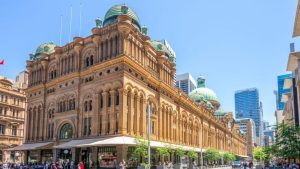
We have been engaged for many development applications for change of use and other developments within the Queen Victoria Building. The site is a state heritage listed property that has a wonderful history. We have provided heritage impact statements for the fit out and change of use for stores within the building as any works within the historic building require development approval from Council.
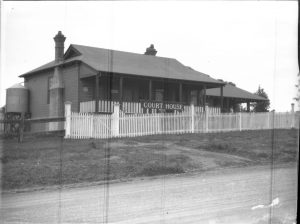
Heritage impact statements can be expensive. We understand that this report can sometimes be the most expensive report for a development application. We go into detail of what goes into the report and how you can minimise your costs to obtain a HIS.
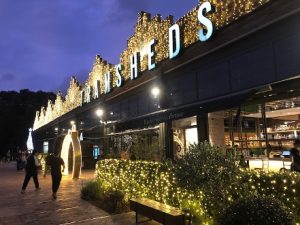
We have been engaged for many development applications for change of use and other developments within the Tramsheds complex at Forest Lodge. The site is a heritage listed property that has undergone substantial rejuvenation to turn a once dilapidated building into a thriving retail/food destination.

We recently worked on a project within “The Spot”, a heritage conservation area within Randwick Council. The project was for alterations and additions to an existing semi-detached dwelling. We give some information about the project and how we assisted our clients with their development application.
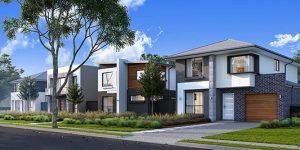
Property developers best friend is knowledge! Make an informed decision on your next property purchase by getting a pre-purchase feasibility report for as little as $400. Determine whether you can subdivide a site, building a duplex or a town house development before making an offer on the site.

Planning a renovation within a heritage conservation area? We talk about the requirements and what you can and can’t do without approval. Find out what is required with any development application and the process with heritage conservation areas and how to obtain approval with our help.

The statement of environmental effects is the most important report for a development application with Council. It is the cornerstone of any good development application and provides details of the development and an assessment of the compliance of the proposal against the relevant legislation and development controls (LEP and DCP). A good statement of environmental effects can make the difference between an approval or a refusal and can streamline the timeframe of the process.
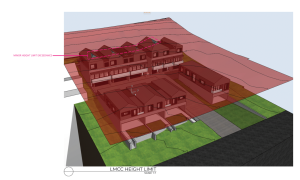
Where a development doesn’t comply with the LEP development standard (such as minimum lot size, height of building and Floor Space Ratio) a variation to the development standard can be sought through the inclusion of a clause 4.6 report. We provide details regarding the report and where a variation might be appropriate.
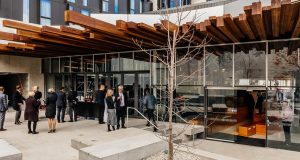
Crime Prevention through Environmental Design (CPTED) is a crime prevention strategy that focuses on the planning, design and structure of cities and neighbourhoods. We discuss the principles of CPTED that are required to be assessed in any Crime Risk Reports for development applications.

Review of Environmental Factors State Environmental Planning Policy (Transport and Infrastructure) 2021 allows schools, TAFE and Universities to obtain approval for developments without requiring Council Development Application approval. We explain the process and what types of development can be achieved without Council approval.

Change of use and fitouts for cafes, shops etc within heritage buildings or conservation areas require Council approval. Find out what is required with any development application to obtain your approval and start operating.
Town Planning Collective is a professional town planning and heritage consulting practice providing expert advice and approval support for development applications across Sydney and New South Wales. We specialise in navigating local planning controls, heritage requirements, and council approval processes for residential and small-scale developments.
Sydney NSW
Greater Sydney
Regional New South Wales
Copyright 2026 Town Planning Collective