
Dual Occupancy on the Northern Beaches

Northern Beaches Dual Occupancy

Dual occupancies on the Northern Beaches are one of our most common enquiries (second only to development objection letters).

We speak with property owners every week — from Mona Vale through to Dee Why and Balgowlah — who are trying to understand what is actually possible on their land under the current planning framework.

Most people are asking the same core questions:

  • Can I build a dual occupancy on my property?

  • Have the rules changed recently?

  • Is my block big enough?

  • Can I subdivide and sell each dwelling separately?

  • And importantly — is it financially worth doing?

These are all valid questions, and the answer has changed significantly over the past few years.

With recent amendments to the State Environmental Planning Policy (Housing) 2021, dual occupancies are now permitted in far more locations than they were previously, including areas of the Northern Beaches where they were historically prohibited.

This has opened up real opportunities for property owners to:

  • unlock additional value in their land

  • create a second income stream

  • accommodate extended family

  • or undertake small-scale development projects

However — and this is where many people get caught out — permissibility does not mean automatic approval.

Every site is still subject to a detailed planning assessment, and factors such as:

  • lot size and dimensions

  • slope and site constraints

  • bushfire and flood mapping

  • heritage considerations

  • access and servicing

can ultimately determine whether a dual occupancy is achievable.

In many cases, we are finding that while a property may be “technically permitted”, the design, subdivision potential or overall feasibility requires careful planning strategy to achieve a successful outcome.

That’s why getting the right advice early in the process is critical — particularly on the Northern Beaches, where local controls, site constraints and Council expectations can vary significantly from suburb to suburb.

Key Planning Changes – What You Need to Know

 Recent amendments to the State Environmental Planning Policy (Housing) 2021 have significantly changed how dual occupancies are assessed across New South Wales.

The most important shift is that dual occupancies are now generally permitted with development consent in the R2 Low Density Residential zone across NSW, including areas where they were previously prohibited under local environmental plans — such as the former Warringah Council area.

This change effectively overrides older local planning controls that restricted dual occupancies, opening up new opportunities for property owners across the Northern Beaches.

However, while this reform has expanded permissibility, it does not create a blanket approval pathway.

The Housing SEPP introduces a number of specific exclusions and constraints, meaning that even if your land is zoned R2, a dual occupancy may still not be permissible or feasible.

Dual occupancies may not be permitted on land that is:

  • a heritage item or contains a heritage item

  • identified as bushfire prone land (in many circumstances)

  • affected by flooding or flood planning constraints

  • located within coastal vulnerability areas or coastal wetlands/littoral rainforest mapping

  • impacted by aircraft noise (ANEF 20 or greater)

  • within proximity to major infrastructure corridors or pipelines

Importantly, a large portion of land across the Northern Beaches — particularly along the coastline and elevated areas with ocean views — is zoned C4 Environmental Living.

Within the C4 zone:

  • dual occupancies are generally prohibited

  • complying development (CDC) pathways are typically not available

  • development is subject to more restrictive environmental and geotechnical considerations

These areas are often affected by slope instability, geotechnical constraints, coastal processes and environmental sensitivities, which further limit development potential.

In addition to these zoning and environmental constraints, standard planning controls such as building height, floor space ratio, setbacks and minimum lot size (particularly for subdivision) still apply through the relevant Local Environmental Plan.

What Is a Dual Occupancy or duplex?

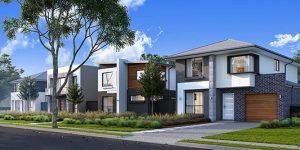
A dual occupancy, also known as a duplex, is defined as two dwellings on a single lot of land (not including a secondary dwelling).

There are two types:

  • Attached dual occupancy
    Two dwellings that share a common wall

  • Detached dual occupancy
    Two separate dwellings on the same lot

Importantly, approval for a dual occupancy does not automatically allow subdivision.
If you want to sell each dwelling separately, you will need a Torrens or strata subdivision approval.

Dual occupancy - Can you sell them separately?

This is one of the most common misconceptions.

A dual occupancy can be built without subdivision, but to sell separately you will need:

  • Torrens Title subdivision (preferred by buyers)
    or

  • Strata subdivision (often used on smaller lots or where site constraints require)

Subdivision approval depends on:

  • minimum lot size under the LEP

  • ability to provide services (water, sewer, access)

  • compliance with planning controls

How we can help with your dual occupancy

We assist Northern Beaches clients at every stage of the dual occupancy process, from initial feasibility assessments and pre-purchase planning advice through to the preparation of Statements of Environmental Effects, Clause 4.6 variation requests (where required) and subdivision strategy. If you’re unsure whether your property is suitable, we can quickly review your site, identify any key constraints and provide clear, practical advice on whether a dual occupancy is achievable and how best to approach approval. If you’re considering a dual occupancy on the Northern Beaches, feel free to get in touch — we can help you understand what is possible, what challenges may apply, and the most effective pathway forward.

Simply fill out the contact form or email us at admin@theplanningcollective.com.au 

Benefits of a Town Planner

Experienced consultant town planners can help with your development

Save Money

Bringing an experienced town planner onboard can help you save money by avoiding unnecessary additional information requests or additional reports.

Save Time

Engaging a town planner to prepare your statement of environmental effect cuts down on the approval timeframe, ensuring all relevant controls and legislations are addressed upfront!

Project Management

Experienced town planners can project manage the development process. Consulting with relevant consultants to ensure your project is delivered and approved quickly.

Council Experience

Town planners with Council experience are valuable in the development process. Council development officers know the process and understand what needs to be done to gain approval.

Easy Approval

Town planners help remove the stress out of a development application approval by avoiding additional information or just handling the whole Council process for you!

Northern Beaches best town planning firm

You should have the best town planners with local knowledge working for your development application! Our local experience and knowledge means that all of our Development Applications for the Northern Beaches Council have been approved!

Why Choose Us

Experts in our field

We have extensive experience in town planningfor NSW Councils and can assist you with any of your development application issues.

Competive Quotes

We pride ourselves in providing competitive and comprehensive quotes that provide expert reports for a competitive price.

Fast Turn Around

We know time is money so we always try to deliver our reports in a fast turn around. We offer service agreements for our regular clients for piece of mind!

We Care

Just have a chat with our principal planner and you will see that we do this not just because it is our job, but because it is our passion!